Custom Bronze Trophies: Patinas, Cast Detail and Design

A bronze trophy is the traditional award at its purest, prized for the warm tone of its metal and for the weight it puts in the hand. Cast, then polished or patinated, bronze yields solid, sculptural trophies with an immediate presence. The material embodies tradition, permanence, and the value of what it honors. Here is why it remains so sought after, and how we turn it into custom bronze trophies.

Trophée_Bronze

Why Choose Bronze for Your Trophies?

Bronze draws the eye first through its color, a warm golden brown that shifts with the finish applied to it. Polished, it reads almost luminous, while a dark patina deepens the relief and gives the form its shadows. Its solid mass gives it a sculptural presence, the opposite of what glass or crystal achieve through transparency, which is why it stays tied to prestigious honors and to awards with a history behind them.

Technically, bronze is an alloy of copper and tin that can be cast, and casting reproduces a model down to its finest detail. Your emblem, a silhouette drawn from your discipline, or a figurative relief can therefore become the shape of the trophy itself, rather than a marking applied to its surface.

Its durability is remarkable: it does not shatter when dropped, it resists corrosion, and it lasts for decades. The patina it develops over the years belongs to its character and is not a sign of wear. This noble alloy does represent a larger investment than an aluminum or acrylic trophy of the same dimensions, and we adjust the format to your budget.

Bronze does have its limits. Its weight complicates the shipping of a large series and calls for a solid base, wide enough to keep the trophy stable. Producing it means making a model and then casting it, which takes longer than a trophy cut on a laser. Its classical character also sits less comfortably with very contemporary visual identities, where aluminum or acrylic serve better. That was the choice we made in modernizing APCHQ's Prix Domus trophy, where bronze and granite gave way to those two materials.

We therefore reserve bronze awards for ceremonies where tradition carries weight, whether that means excellence awards, career recognition, or institutional awards. It also comes into its own for championship trophies passed from one edition to the next, pieces that are displayed more often than they are lifted. Associations and professional orders find in it a material equal to an award that carries the history of their organization.

Tell us about your award

What Are the Design Options with Bronze?

The possible forms run from figurative sculpture to abstract shape, by way of the stylized silhouette or the emblem in relief, depending on the look you are after. The model is shaped by hand or drawn in three dimensions before casting, and the surface is then worked and polished to bring out the crispness of the detail. Jean-Philippe Caron, our president and creative director, has handled molten bronze himself, unmolding and polishing sculptures in sculptor Kieff's foundry in Beloeil, as recounted in the article on Jean-Philippe Caron's path.

Bronze takes several markings, and we choose among them according to the result you want. Laser engraving sets a name, a date, or a logo into the metal, while sandblasting creates a matte ground that makes the polished relief stand out. Engraved plates mounted on the base carry longer texts, such as the roll of winners of an award presented year after year.

As for finishes, bronze can be mirror-polished, satin, or patinated, with a patina ranging from warm brown to deep black or verdigris. These finishes combine readily on a single trophy, whether that means polished relief catching the light against a patinated ground or a bright emblem set on a dark mass.

This metal also pairs with other materials to anchor the piece. A granite base gives it a mineral footing, while a wood base, in maple or walnut, brings warmth to it. An element of glass or crystal, for its part, introduces transparency at the heart of a metal mass.

That interplay of materials and finishes makes bronze a material of choice for custom-created trophies, designed to last as long as the award they stand for.

Examples of Custom Bronze Trophies

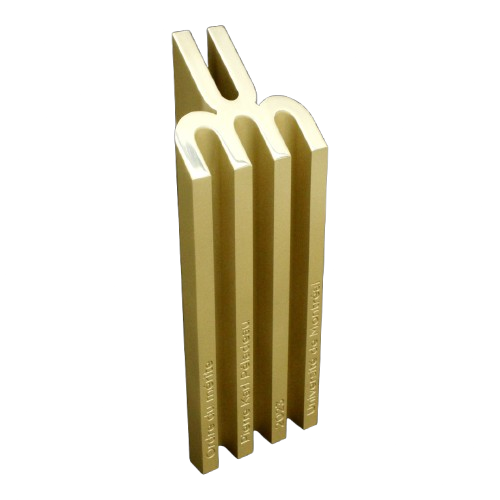
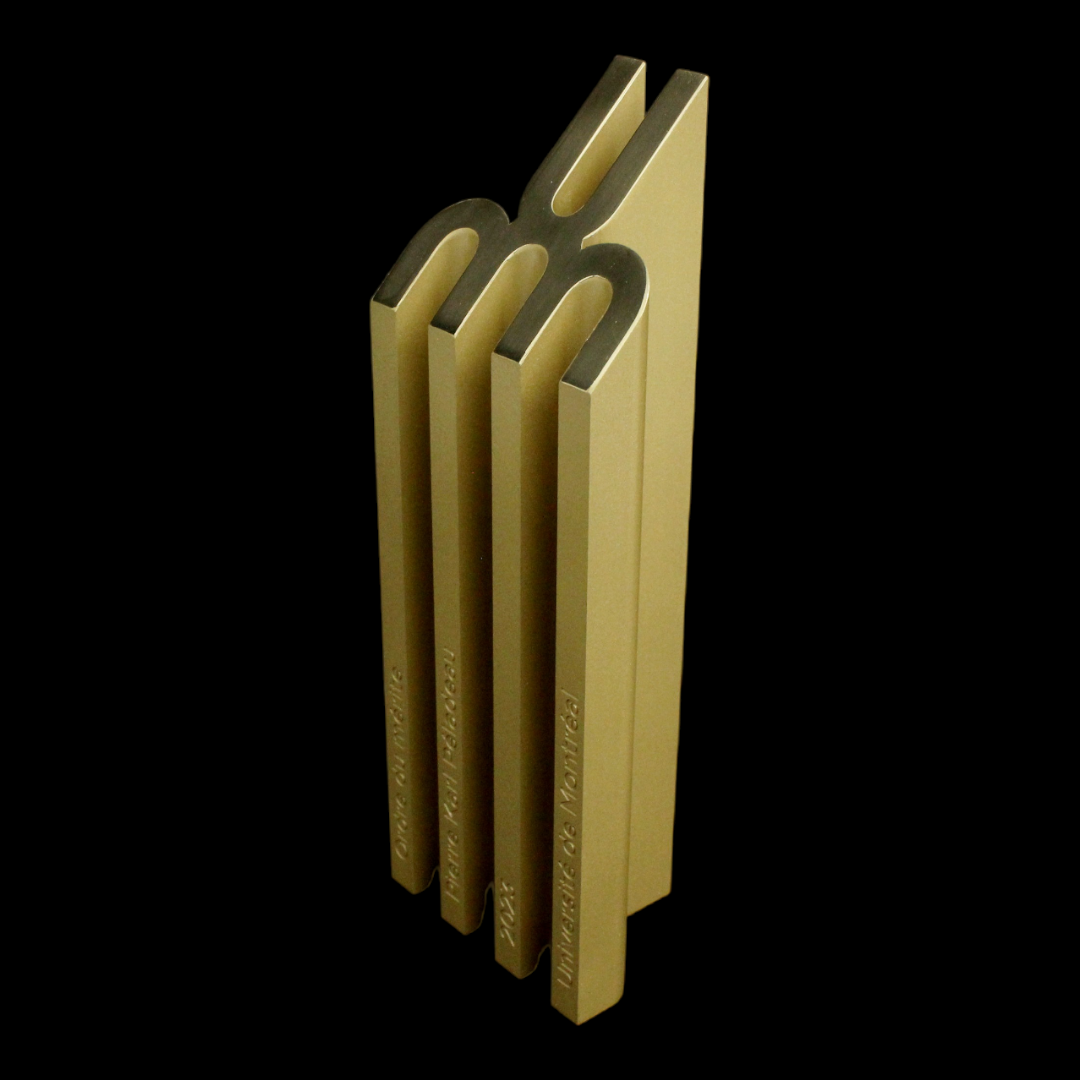
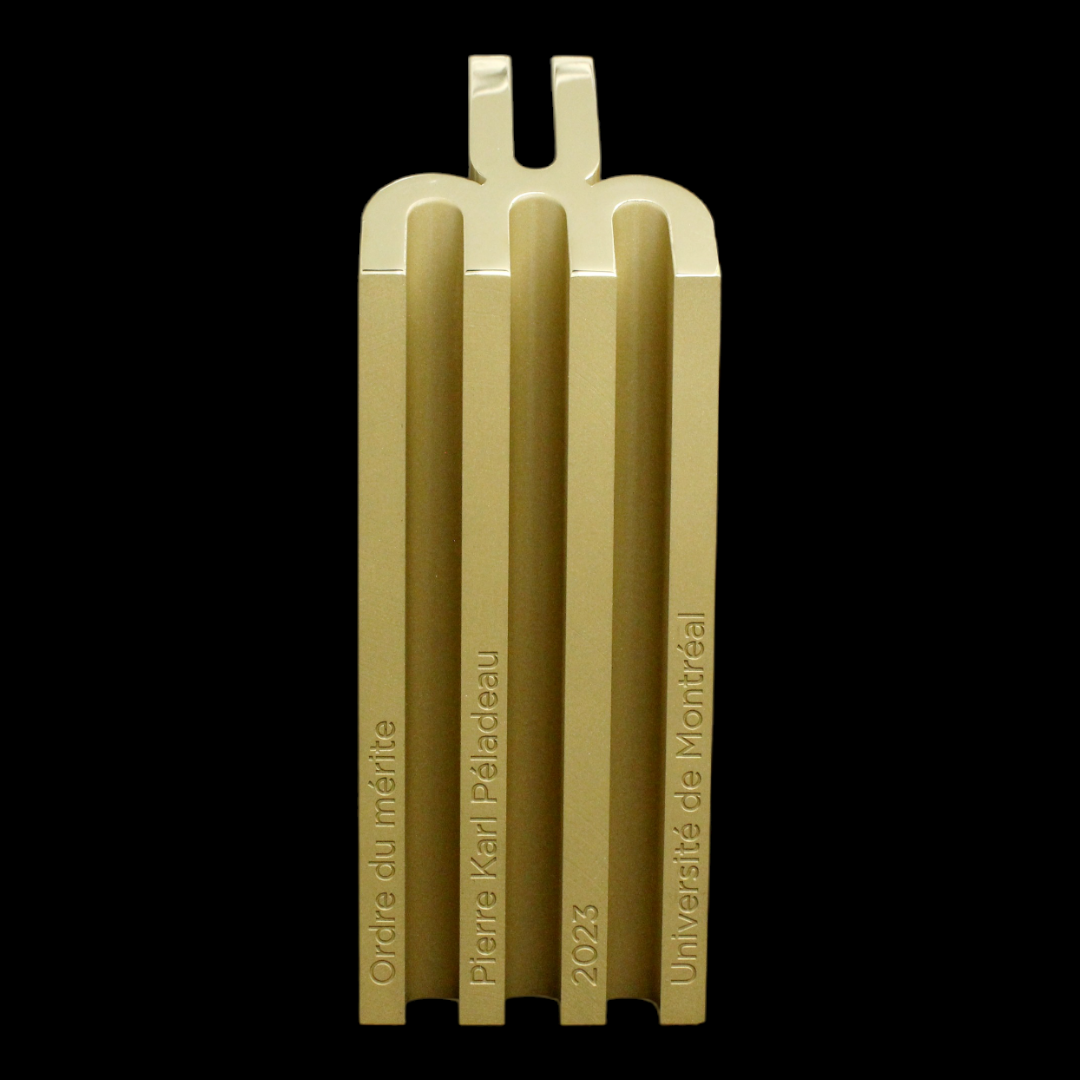
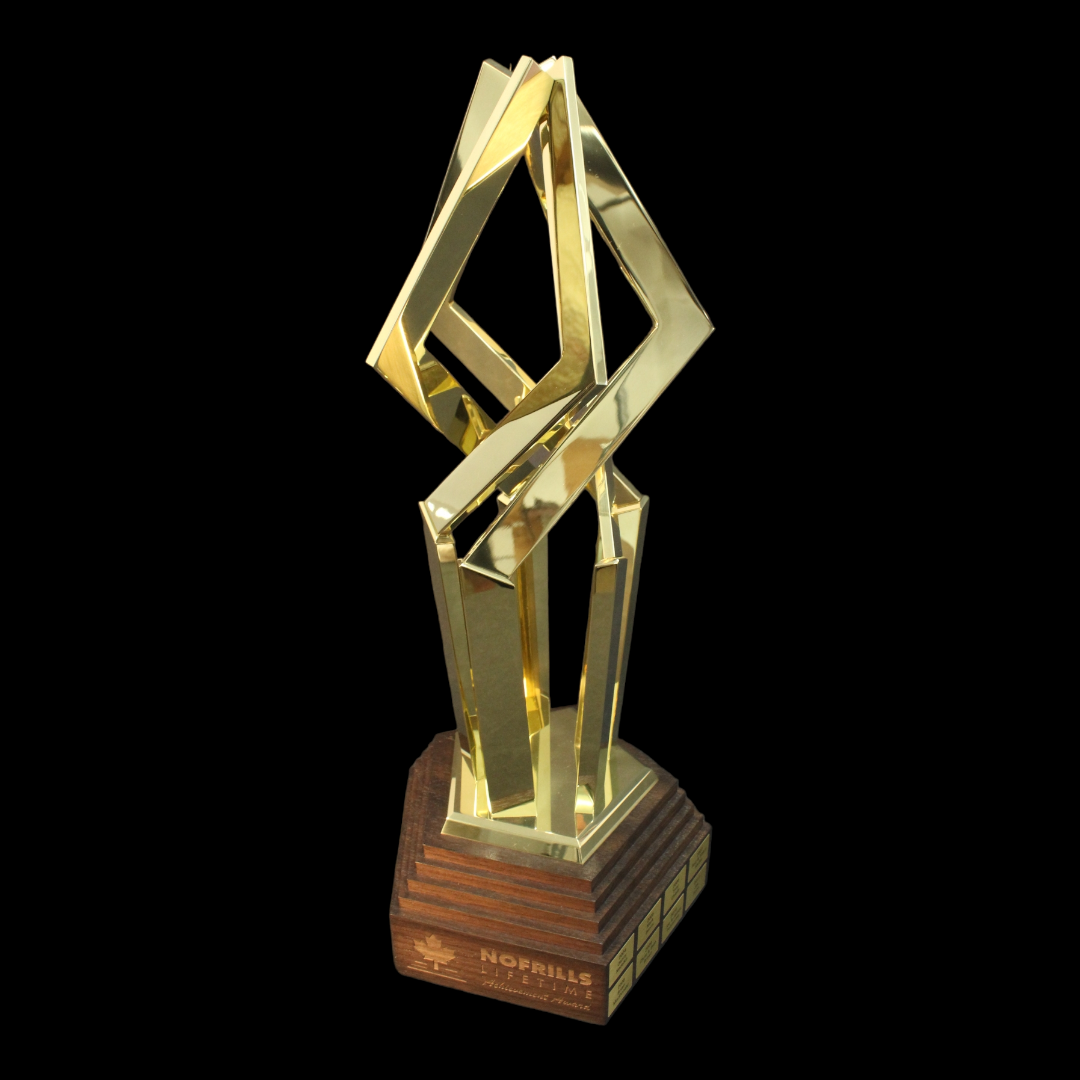
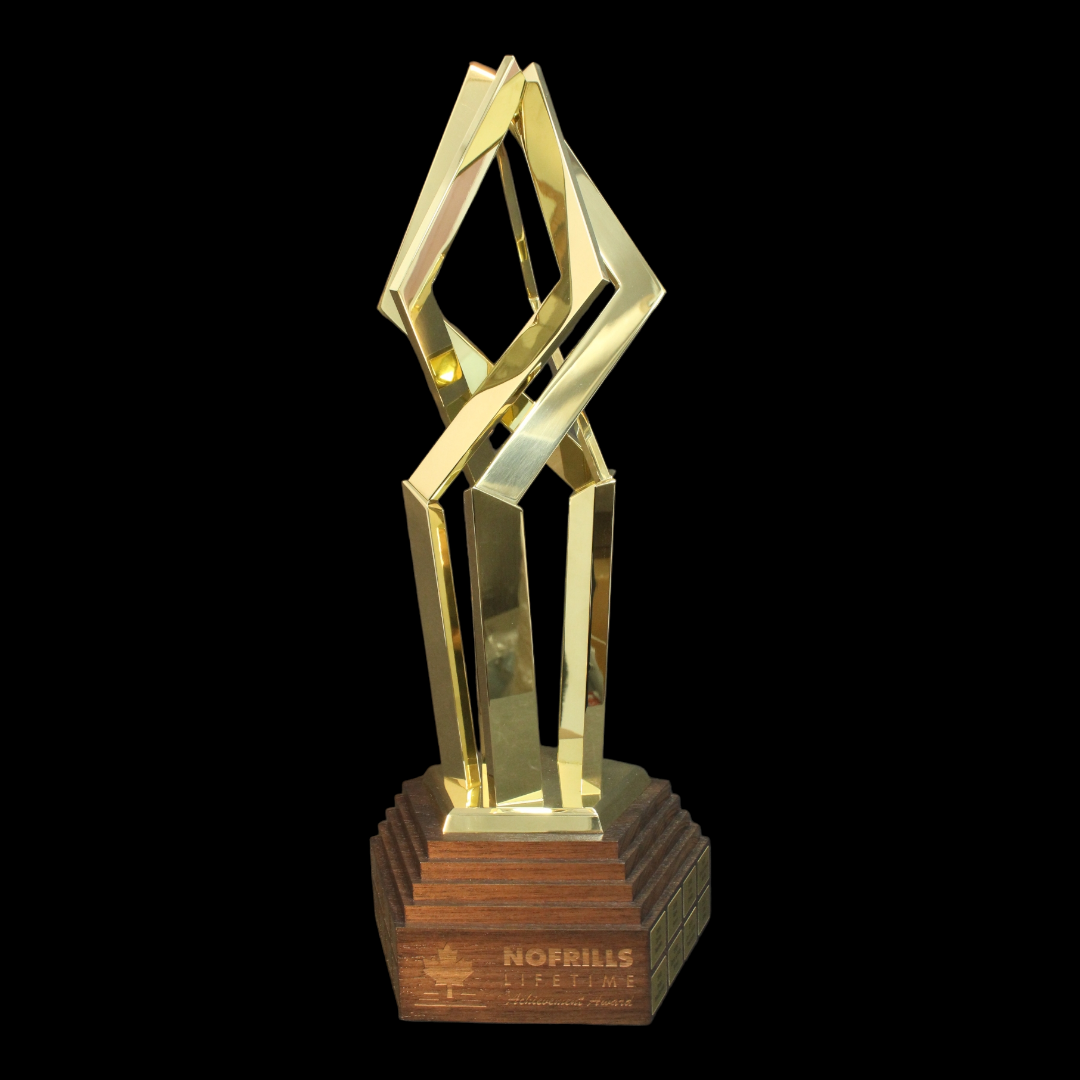
Browse a selection of custom bronze trophies made for Quebec organizations in search of an award built to last. These pieces show the range of forms, patinas, and material pairings, from the sculpted figure to the emblem set on a stone base.

Trophée Bronze
Trophée Bronze
NoFrills
NoFrills

Design Your Custom Aluminum Trophy

Every trophy we design tells a unique story—yours.
Share your vision, and let’s see how to transform it into a memorable creation.

Frequently Asked Questions About Our Bronze Trophies

What is the difference between a bronze trophy and a bronze-colored trophy?

A bronze trophy is cast in the metal itself, which makes it heavy, carries its tone right through its thickness, and lets it take on a patina over time. A bronze-colored trophy is made of another material, most often anodized aluminum or a surface-tinted metal, and borrows nothing but the shade. It weighs far less and remains more accessible, but it develops no patina, and a deep scratch exposes the material underneath. We offer both: bronze awards meant to endure, and bronze-anodized aluminum when lightness or budget comes first.

How long does it take to produce a bronze trophy?

Allow three to four weeks for a custom-created trophy, from the first conversation to delivery. For bronze, add the making of the model and the casting itself, which can extend that timeline. [To be confirmed by Protocole: production time for a bronze piece] The sketches and then the 3D rendering, which you approve before anything is produced under our creative process, settle the shape quickly.

How do you care for a bronze trophy?

A soft, dry cloth is enough to lift the dust and restore the shine of the polished areas. Avoid metal products and abrasive cleaners, which strip the patina and leave pale marks behind. The patina keeps evolving slowly, above all where hands come to rest, and none of that harms the metal. Displayed indoors, a bronze trophy holds its appearance for decades.

How are bronze trophies protected during shipping?

For a piece of this weight, we build a plywood shipping case to its dimensions, with an internal shock-absorbing system that holds it in place, certified for air, truck, and cargo transport. For an unveiling on stage, a presentation chest, also certified for air transport, carries the trophy through to the ceremony.

What makes the price of a bronze trophy vary?

The price of a bronze trophy depends first on how much metal it takes, since a large solid piece calls for more alloy and more finishing than a desktop format. The intricacy of the model counts as well, as do the finish chosen and the number of pieces produced. On a custom project, the budget steers the creative direction from the first sketches onward, and we propose a solution scaled to it.

A bronze trophy brings together the standing of a classical alloy, a durability measured in decades, and a patina that gains character with age. At Protocole, we put our Quebec craftsmanship to work on custom bronze trophies drawn for your organization, whose shape you approve in 3D rendering before anything is produced. Tell us about the award you are preparing or request a quote, and if your deadline is short, our ready-to-give range, in other materials, is personalized and delivered in about seven days.

Create your symbol of pride.

Every trophy tells a story — yours could be the next.