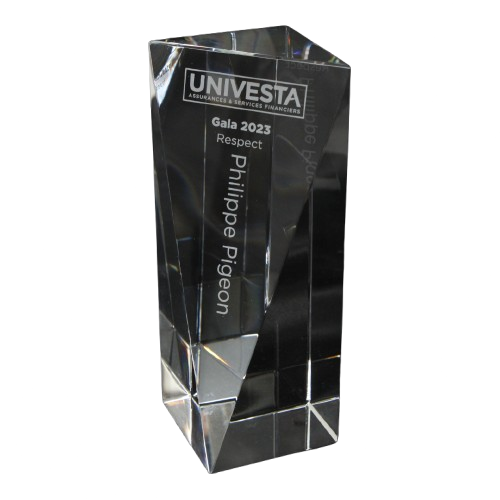
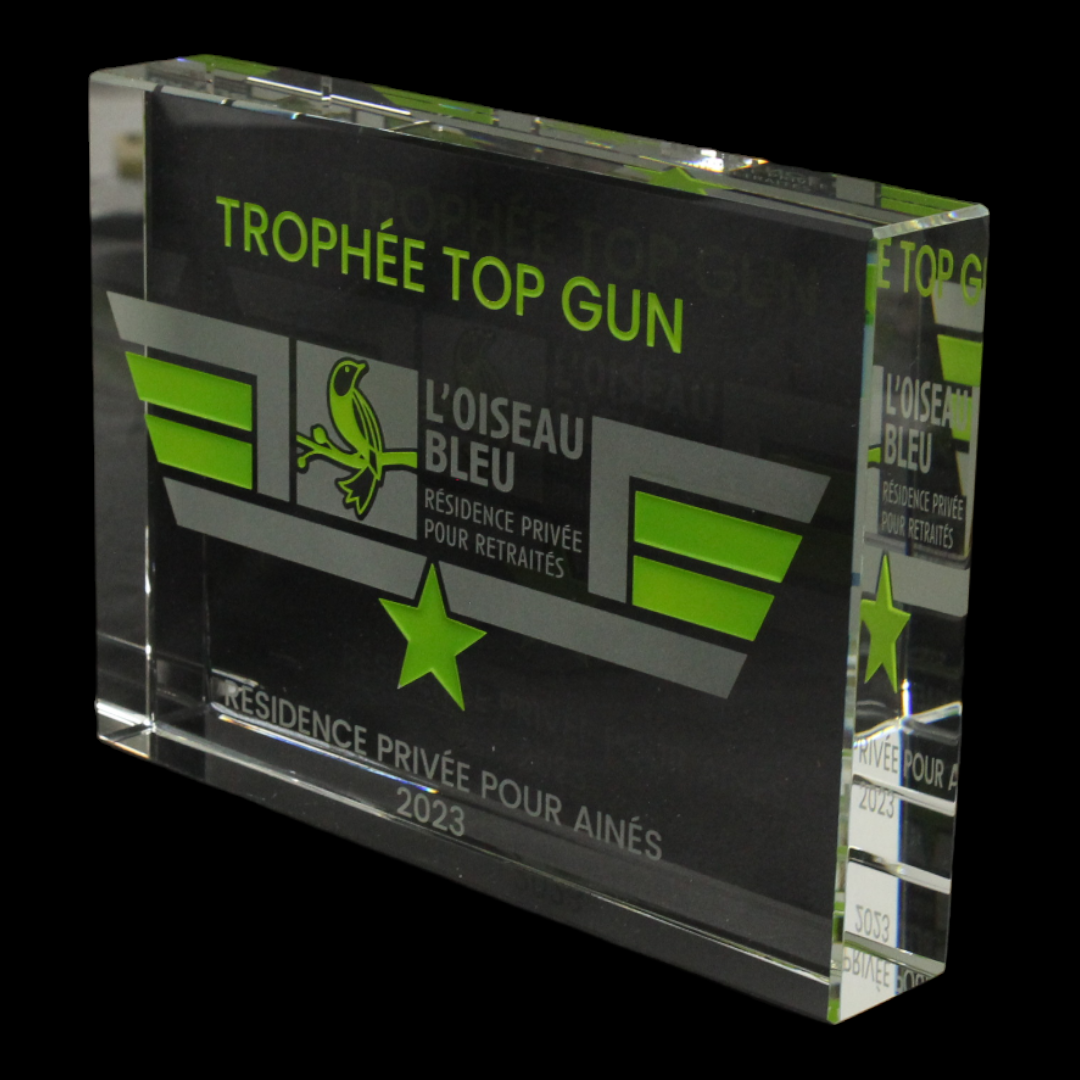
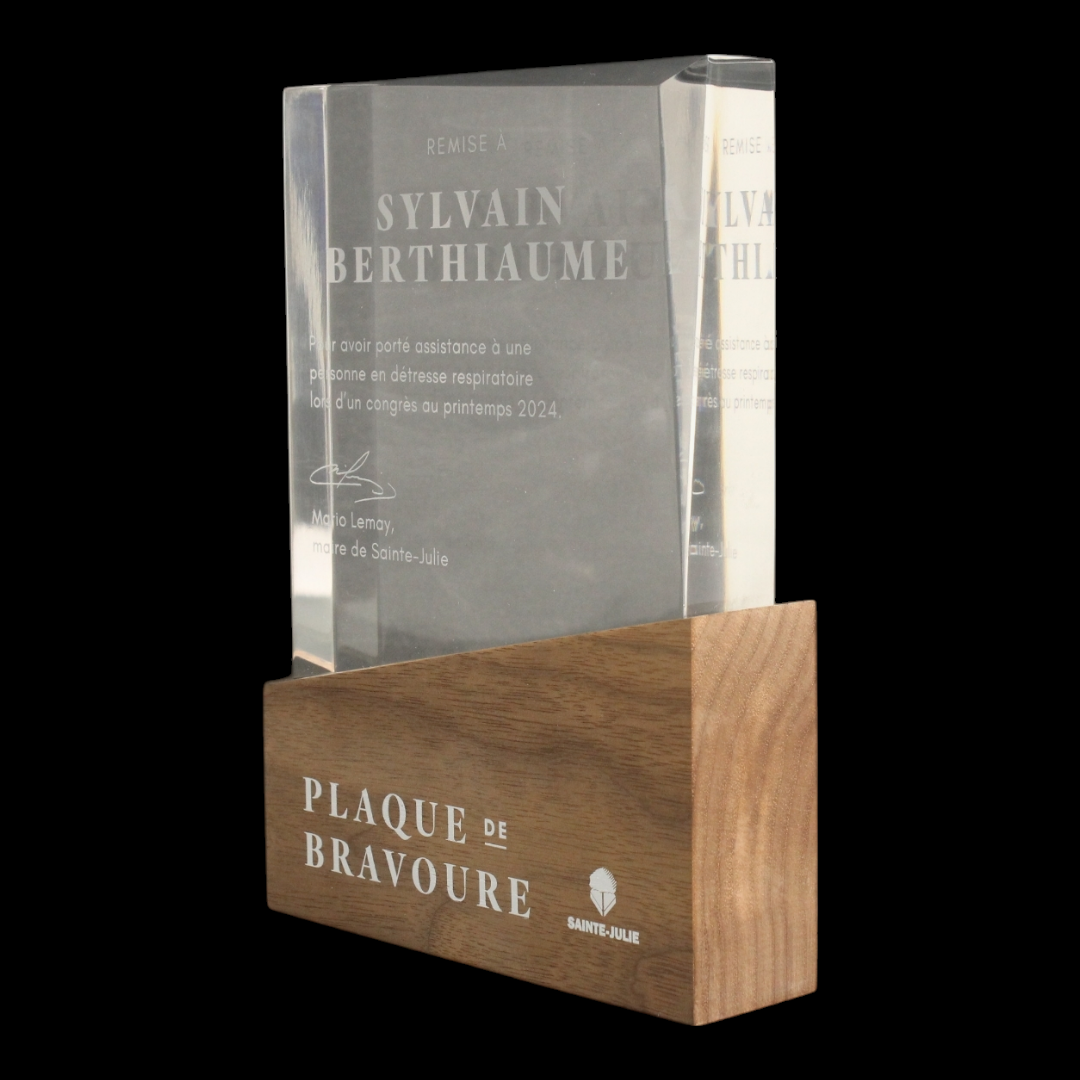
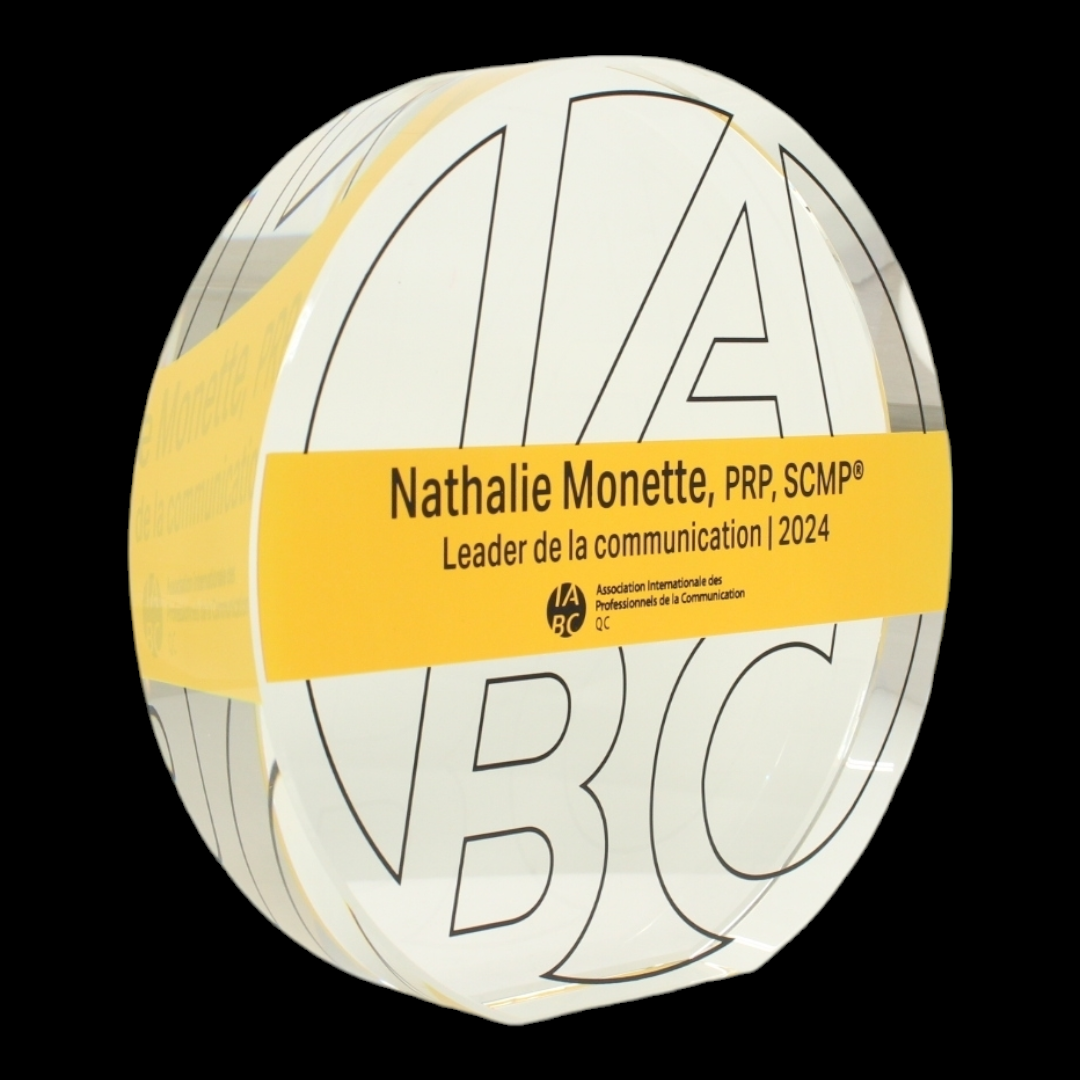
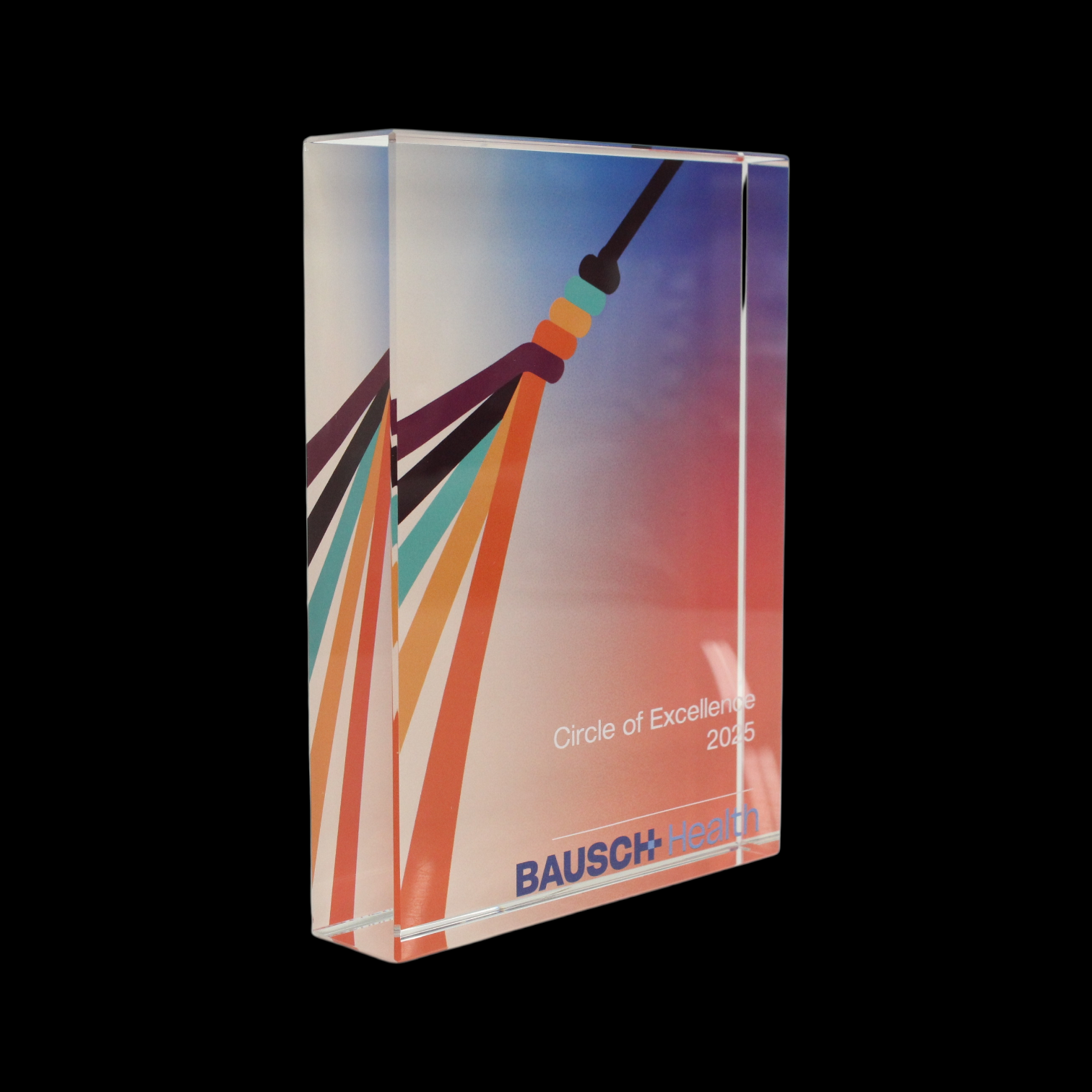
Crystal awards are appreciated first for their brilliance, which comes from the composition of the material itself: the metal oxides it contains raise its refractive index and its density, which allows it to pick up the lighting of a room and return it as colored reflections along its edges. A polished award sends the light of a gala back with an intensity that is genuinely uncommon, while keeping the transparency that lets the engraving show through.
From a technical standpoint, crystal takes marking well and lends itself to several results depending on the effect you want. Laser engraving sets a logo, a name, or a date in satin white that reads against the transparency, while sandblasting gives a softer, frosted result better suited to a solid block of color or a broad motif. Color is then added by printing, either on a face of the piece or on a separate base.
Weight is part of the message the award carries: a crystal award is picked up with both hands and set down carefully, and that physical heft conveys the seriousness of the recognition better than a lighter piece. Its durability works the same way, since it keeps its place on a shelf or a desk for decades without yellowing or clouding, and a soft cloth is all it takes to restore its original clarity.
Crystal does have its limits. It breaks if dropped, where aluminum or acrylic absorb the impact, and its weight complicates shipping a large run. Its classic character also sits less comfortably with very contemporary brand identities, where brushed aluminum or tinted acrylic serve the purpose better, and its budget sits above the other materials at equal dimensions.
We therefore reserve crystal for ceremonies where formality matters: corporate galas, excellence awards, career recognition, and academic or institutional distinctions. Financial tombstones use it as well, to mark the closing of a significant transaction.